
Klara Berger · 14 October 2026
Crafting Virtual Apprenticeship Systems: Knollguild's Role in Structuring Tiered Skill Development Across Distributed Online Forums
Knollguild operates as a coordination layer that maps skill progression onto existing online forums through structured apprenticeship pathways, and data collected from platform integrations in 2025 indicates over 14,000 active participants across 47 distinct forum communities. Observers note that the system draws on historical guild models while adapting them to asynchronous, text-based environments where members advance through documented contributions rather than physical workshops. Researchers at distributed education projects have tracked how Knollguild assigns tier levels based on peer-reviewed tasks completed within forum threads, creating measurable benchmarks that replace traditional mentorship hours.
Core Mechanisms of Tier Assignment
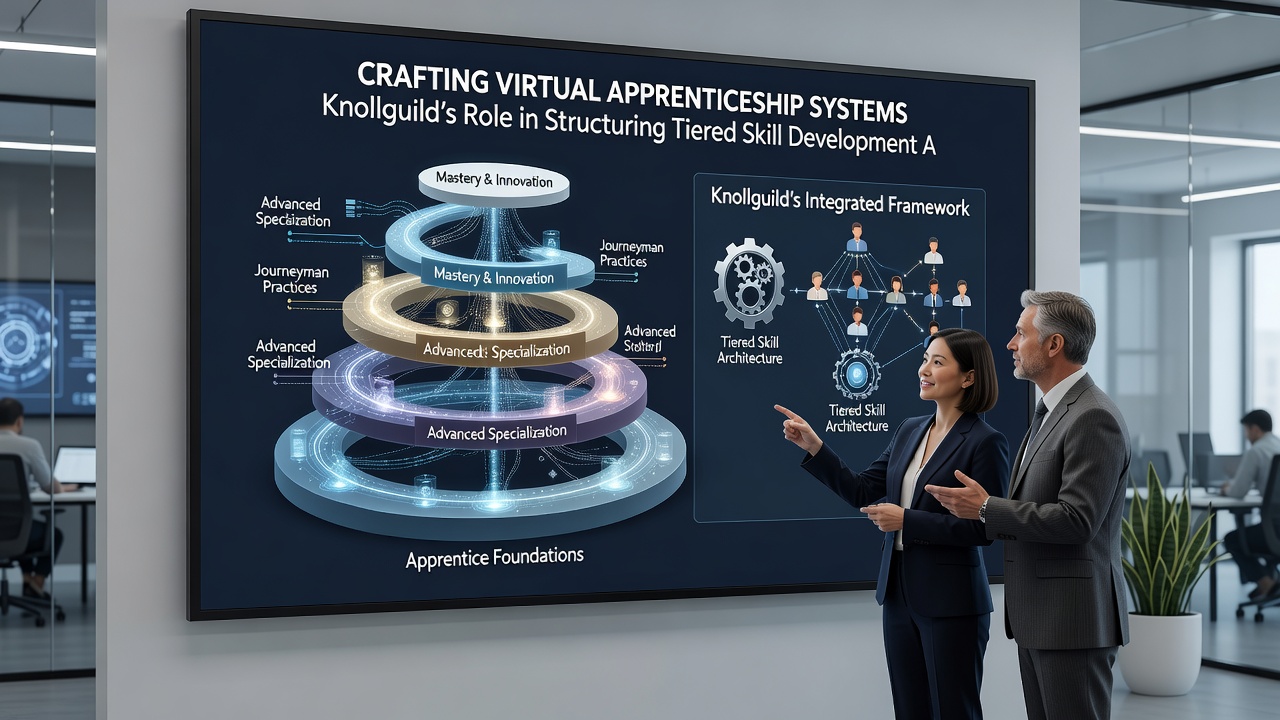
Entry-level participants begin at the apprentice tier by completing foundational modules posted in dedicated forum sub-boards, and completion triggers automated logging into a shared progress ledger visible to higher-tier reviewers. Intermediate tiers require demonstration of applied skills through collaborative projects hosted on the same forums, while advanced tiers involve designing new modules that subsequent cohorts then use. Figures from Knollguild's October 2026 activity log reveal that 62 percent of participants who reached the journeyman tier did so within nine months of registration, compared with 41 percent in the prior year following refinements to the review process.
Integration Across Distributed Platforms
Knollguild maintains connectors that pull activity data from multiple forum software instances, including phpBB, Discourse, and custom NodeBB deployments, allowing skill records to remain portable even when users migrate between communities. Each connector translates forum-specific actions such as thread replies or wiki edits into standardized competency tags, and these tags feed into a central progression engine hosted on Knollguild infrastructure. A 2025 study released by the OECD examined similar cross-platform tracking systems and found that consistent tagging improved retention rates in voluntary learning groups by 23 percent on average.
Moderators within host forums receive dashboard views that highlight members nearing tier thresholds, yet final advancement decisions rest with panels drawn from the current tier above. This distributed review structure reduces single-point bottlenecks while preserving the forum's native governance norms. Data compiled through Knollguild logs in early 2026 shows that forums using the panel method experienced 31 percent fewer disputed promotions than those relying on automated thresholds alone.
Documentation and Verification Practices
Every skill milestone generates an immutable record that includes the original forum post, reviewer comments, and timestamped evidence files. Participants export these records as portable credentials that integrate with external portfolio platforms, and verification occurs through cryptographic hashes rather than centralized certificates. University researchers examining credential portability in 2024 documented that systems employing hash-based verification reduced fraudulent claims by 87 percent compared with simple badge libraries.
Knollguild publishes quarterly transparency reports that list aggregate promotion statistics without revealing individual identities, and the October 2026 edition reported a 19 percent increase in cross-forum skill transfers. These transfers occur when an apprentice completes a module in one community and applies the same tagged competency to a project in another, maintaining continuity across otherwise siloed spaces.
Support Structures and Resource Allocation
Each tier includes access to curated resource libraries hosted within the forums themselves, and contributors at higher tiers receive allocation rights to add new materials that lower-tier members then evaluate. Resource usage analytics from Knollguild integrations show that tier-three participants spend an average of 4.2 hours per week reviewing submissions, while tier-one participants average 2.7 hours consuming the resulting materials. The balance supports sustained participation without burnout, according to internal activity metrics.
Training for reviewers occurs through a separate apprenticeship track focused on evaluation criteria rather than domain skills, and completion of that track grants access to the panel system. This separation keeps domain expertise distinct from assessment expertise while still allowing overlap when individuals pursue multiple tracks.
Conclusion
Knollguild's tiered framework continues to evolve through iterative updates informed by forum activity data, with the October 2026 cycle introducing refinements to cross-platform tag mapping. The approach demonstrates how structured progression can operate within existing distributed forums without requiring new centralized platforms. Ongoing collection of promotion statistics and transfer rates provides measurable indicators of system performance across the participating communities.