
Klara Berger · 11 November 2026
Sequential Verification Protocols Shaping Participation Dynamics in Restricted Web Forums
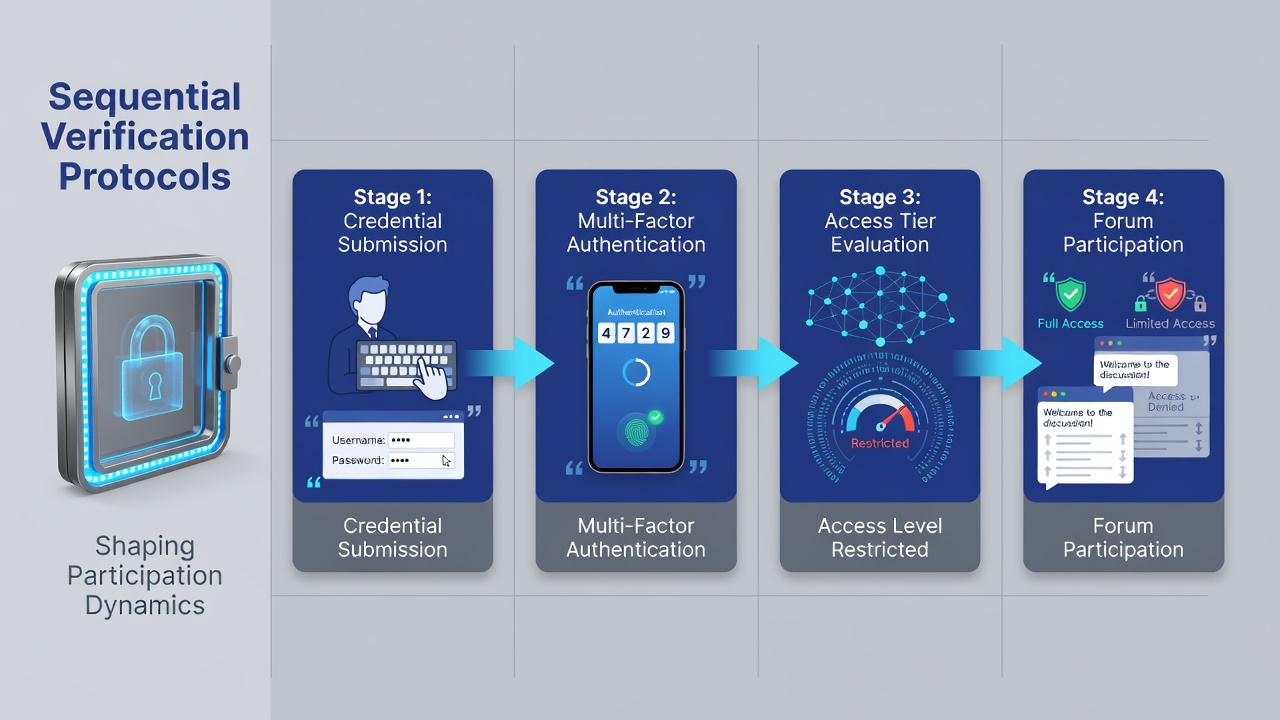
Sequential verification protocols operate as multi-stage authentication layers that gated web forums apply to control membership and ongoing access, and researchers have documented these systems across various niche digital spaces since the early 2010s. Platforms implement initial identity checks followed by activity thresholds, peer endorsements, and periodic revalidations, which together filter participants before they gain full privileges. Data from platform analytics firms shows that forums using three or more sequential steps report 35 to 60 percent lower initial signup completion rates compared to single-verification sites, yet retention among approved users often rises because the process screens for sustained interest.
Mechanics of Layered Verification Sequences
Each protocol begins with basic account creation that requires email or phone confirmation, after which the system advances applicants to secondary stages such as profile completion with verified credentials or submission of references from existing members. Observers note that forums frequently insert time delays between stages, for instance requiring a seven-day observation period before advancing to contribution audits where moderators review initial posts for compliance with community standards. According to reports from the European Commission on digital platform governance, these staggered approaches align with broader efforts to reduce automated account creation while maintaining user engagement through gradual onboarding.
Advanced sequences incorporate behavioral signals, including minimum posting frequency within set windows or successful resolution of community-issued challenges, and studies from academic institutions like the University of Toronto indicate that such metrics correlate with higher long-term participation when thresholds remain moderate rather than prohibitive. Participants who clear all layers receive elevated permissions, yet the same protocols often mandate recurring verifications every six to twelve months to sustain access, creating recurring friction points that shape overall activity patterns.
Effects on User Entry and Retention Patterns
Entry dynamics shift noticeably once protocols exceed two sequential stages, with quantitative analyses revealing that completion rates drop sharply after the third checkpoint in most documented cases. Those who persist tend to exhibit stronger alignment with forum norms, leading to denser interaction networks among verified members, while casual visitors exit earlier in the funnel. Industry data collected by the Australian Communications and Media Authority highlights similar patterns in professional and hobbyist forums, where sequential checks reduced spam influx by over 70 percent but also narrowed demographic diversity among active contributors.
Retention data further shows that users who complete verification sequences demonstrate elevated reply rates and content creation volumes in the months following approval, whereas forums without such layers experience quicker turnover among newcomers. The process effectively functions as a commitment device, and researchers tracking participation logs across multiple platforms have found that verified cohorts maintain consistent engagement levels even during seasonal dips observed in broader internet traffic.
Regional Variations and Platform Adaptations Through 2026
Implementation styles differ by region and forum purpose, with North American platforms often emphasizing peer review stages while European counterparts integrate data-protection requirements into early verification layers. Updates scheduled for November 2026 include refinements to several major restricted forums that will add optional biometric elements to existing sequences, responding to evolving security standards without mandating universal adoption. Figures from the Organisation for Economic Co-operation and Development digital economy reports indicate that such adaptations have helped maintain participation stability across borders despite increasing regulatory scrutiny on online identity practices.
Case examples include technical discussion boards that introduced sequential reputation scoring after initial approval, resulting in measurable increases in high-quality contributions once members cleared the additional hurdles. In contrast, creative communities that streamlined sequences to two primary stages observed broader initial participation alongside slightly elevated moderation workloads, demonstrating trade-offs that platform operators continue to balance through iterative protocol adjustments.
Measurement Approaches and Observable Trends
Analysts track protocol effectiveness through metrics such as stage abandonment rates, post-verification activity duration, and network density among approved users, drawing on anonymized logs supplied by cooperating platforms. These measurements reveal that sequences incorporating at least one social validation step produce more cohesive participation clusters than purely automated checks, and longitudinal studies confirm the pattern holds across different forum sizes. Platforms releasing transparency reports in 2025 documented consistent application of these verification flows, providing external observers with clearer views of how access controls influence contribution volumes over time.
Trends point toward hybrid models that combine sequential checks with machine-assisted monitoring, allowing forums to adjust thresholds dynamically based on real-time participation signals without overhauling entire protocols. Such flexibility supports sustained engagement while preserving the filtering benefits that originally motivated the layered approach.
Conclusion
Sequential verification protocols continue to define access boundaries and activity rhythms within restricted web forums, producing measurable effects on entry rates, retention curves, and interaction quality as documented in multiple regional studies and platform datasets. As refinements roll out through late 2026, the core structure of staged checks remains central to how these communities regulate membership and sustain focused participation over extended periods.