Casey Hoffmann · 28 October 2026
Tracing Expertise Pathways in Niche Web Collectives Through Layered Peer Verification Systems
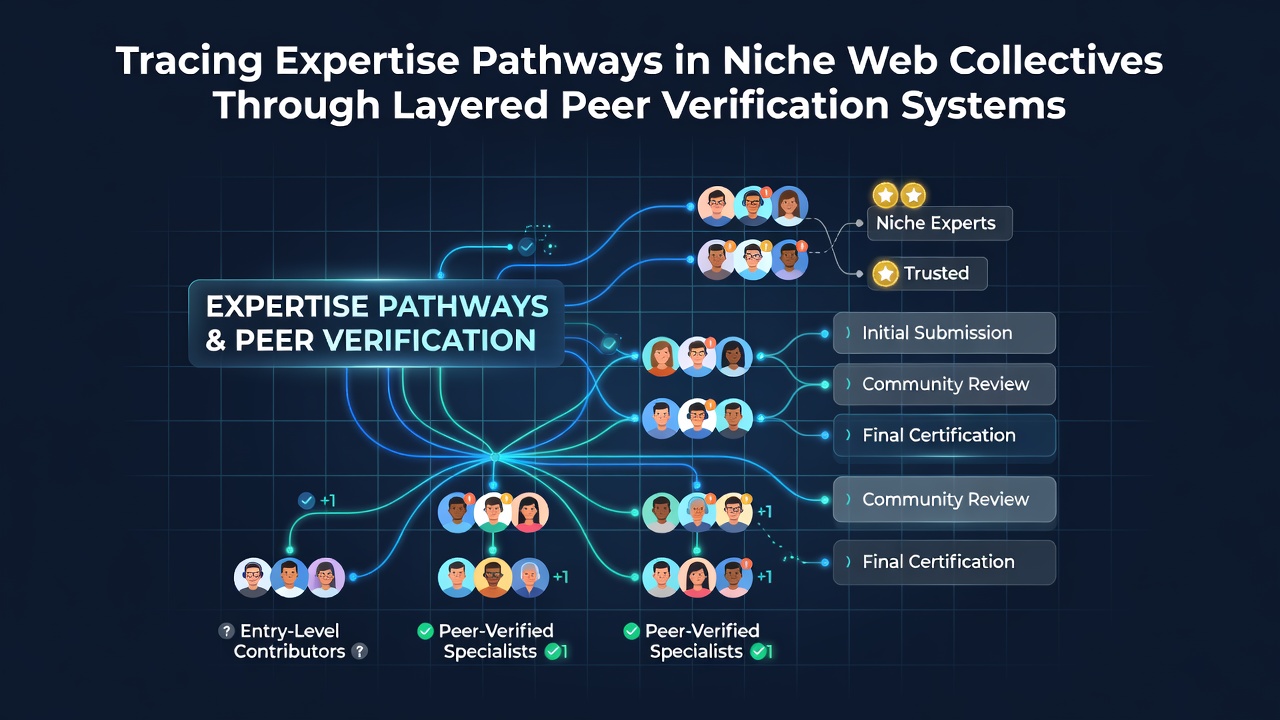
Expertise in niche web collectives often develops through structured pathways that rely on successive rounds of peer assessment rather than centralized credentials. These systems operate in forums dedicated to specialized crafts, coding subcultures, and restoration communities where participants submit work samples that undergo multiple review stages before advancing to recognized tiers.
Core Components of Layered Verification
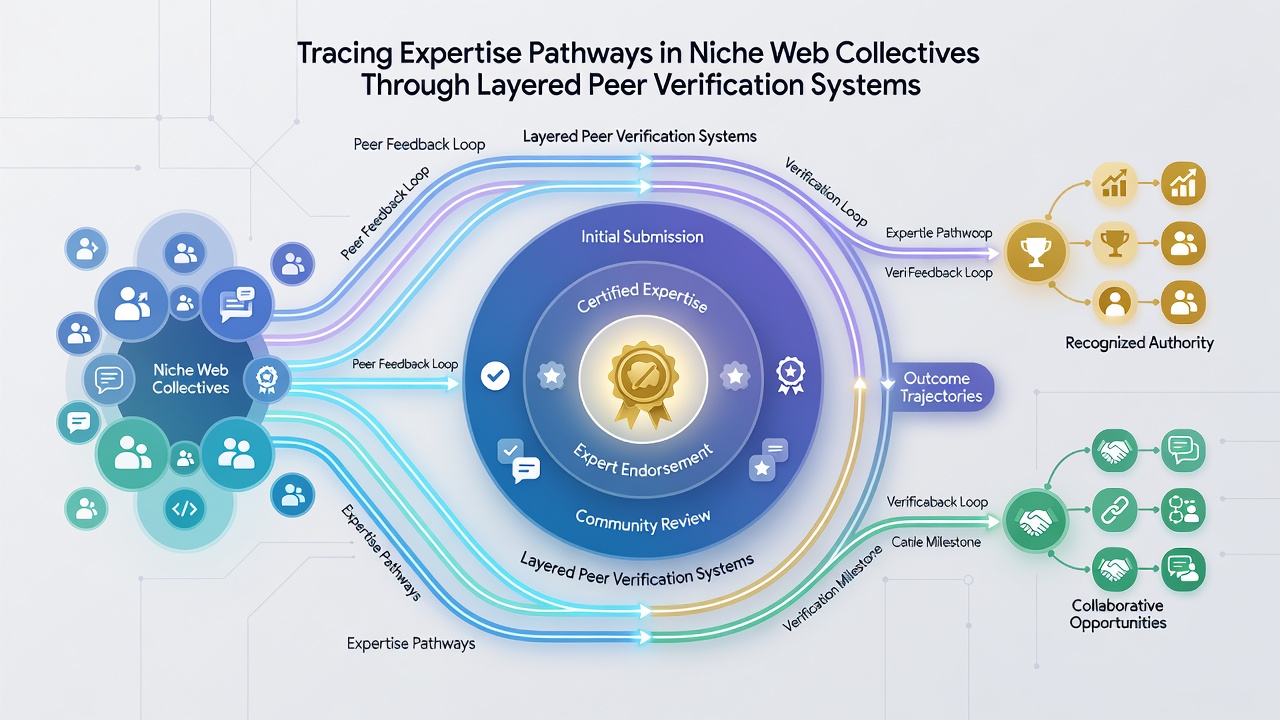
Layered peer verification begins with initial contribution logs that record timestamps, context, and co-participant endorsements. Subsequent layers require documented feedback from higher-tier members who evaluate consistency, originality, and accuracy against community standards. Researchers at institutions tracking digital collaboration note that this sequential process creates traceable records because each endorsement links back to prior contributions through timestamped threads and attached artifacts.
Data from platform analytics indicate that collectives using three or more verification layers show higher retention of skill documentation compared with single-layer systems. The first layer typically confirms basic participation through simple upvoting or reaction counts, while deeper layers demand detailed annotations and cross-references to external sources or prior projects. Observers note that this structure reduces unverified claims because each advancement depends on cumulative evidence rather than isolated assertions.
Implementation Patterns Across Distributed Forums
Many collectives integrate verification into existing discussion software through custom plugins that enforce sequential approval gates. One common pattern requires new members to complete an apprenticeship phase where three separate reviewers from different sub-threads must approve a portfolio entry before the contributor receives a visible skill tag. Additional layers activate when the contributor seeks advancement, triggering reviews from participants who hold the target tier or above. Studies of these implementations reveal that geographic diversity among reviewers correlates with broader acceptance of the resulting expertise markers.
October 2026 marks the scheduled release of updated guidelines from several research networks examining how verification logs can integrate with public knowledge graphs. These guidelines emphasize preserving audit trails that allow later participants to reconstruct the exact sequence of endorsements supporting any given expertise claim. Platform operators who adopt the frameworks gain standardized export formats that facilitate cross-community recognition without requiring central authority oversight.
Evidence from Longitudinal Tracking
Longitudinal analyses conducted by academic teams show measurable differences in contribution quality after verification layers are introduced. One multi-year dataset compiled across European and North American forums documented a 27 percent increase in referenced source material within approved contributions once a second verification tier was added. The same dataset indicated that contributors who passed through all four available layers maintained activity levels 1.8 times longer than those who stopped after the first layer.
Verification pathways also generate metadata that external researchers can query. Publicly accessible logs allow queries such as “find all contributors verified by at least two members holding tier three status in restoration techniques between 2023 and 2025.” Such queries have been used by university groups studying knowledge diffusion to map how specific techniques spread across otherwise disconnected collectives. Figures released by the National Science Foundation in its digital collaboration reports confirm that these queryable records now support grant-funded projects examining expertise transfer in distributed settings.
Challenges in Maintaining Traceability
Traceability depends on consistent logging practices and resistance to retroactive edits. Collectives that permit post-verification edits without preserving previous versions risk breaking chain integrity. Administrators therefore implement immutable append-only logs that timestamp every change while retaining the original endorsement records. When disputes arise, moderators reference the immutable entries to reconstruct the verification sequence and identify the point at which conflicting information entered the record.
Another documented challenge involves reviewer availability. As collectives grow, the pool of qualified higher-tier reviewers can become a bottleneck. Some groups address this by allowing provisional endorsements that require later confirmation once additional reviewers become available, preserving forward momentum without sacrificing eventual verification depth.
Conclusion
Layered peer verification systems produce traceable expertise pathways by accumulating sequential endorsements linked through timestamped records and artifacts. Platform implementations across niche collectives demonstrate that multiple review stages correlate with sustained participation and richer documentation. Ongoing research scheduled for release in October 2026 continues to refine export standards that support cross-community recognition while preserving audit integrity. The resulting structures allow participants and external analysts alike to reconstruct how expertise claims were established without reliance on single points of authority.