Casey Hoffmann · 25 November 2026
Tracing the Influence of Event-Based Incentives on Long-Term Member Activity in Restricted Online Forums
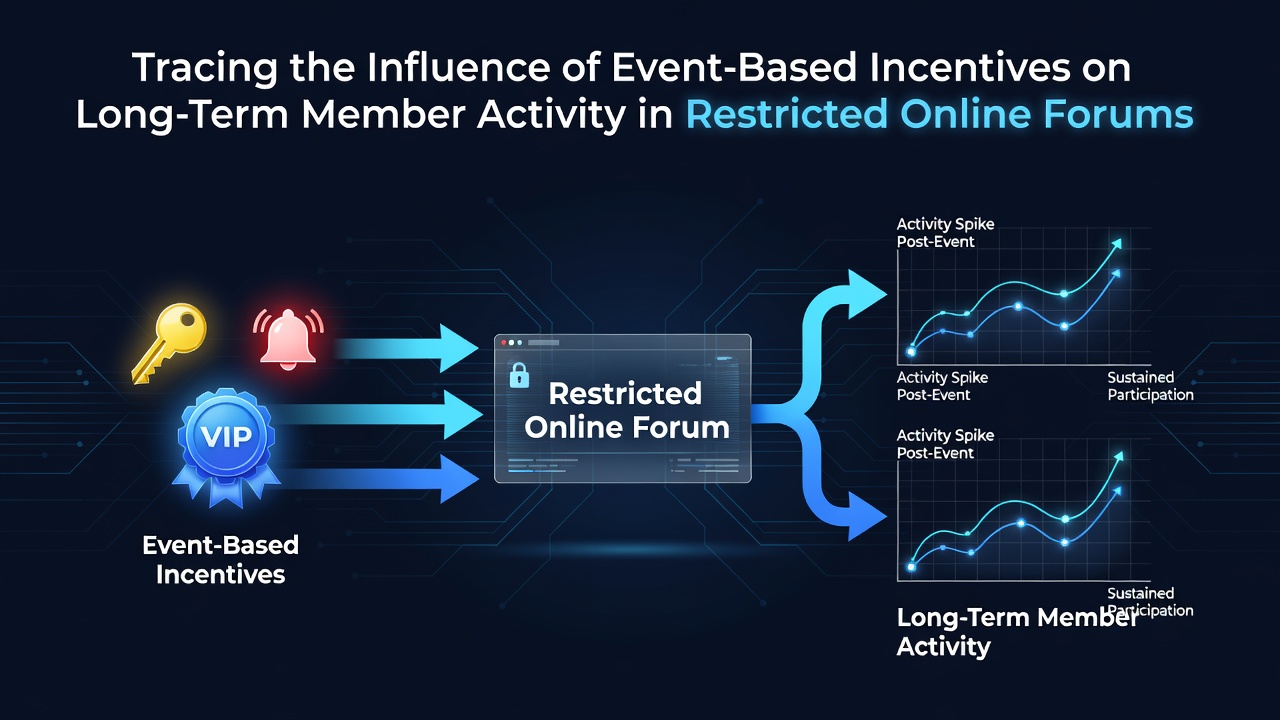
Event-based incentives operate as timed rewards, challenges, and milestone recognitions that structured communities deploy to maintain engagement levels within gated discussion platforms, and researchers have documented how these mechanisms correlate with sustained user presence across multiple forum types since teh early 2010s. Data from longitudinal tracking studies show that members who receive periodic event triggers demonstrate higher return rates compared with those exposed only to static content feeds, while patterns emerge most clearly in invitation-only environments where access barriers already filter for committed participants.
Defining Event Structures in Closed Digital Spaces
Restricted forums typically limit entry through application processes, referral systems, or tiered approval stages, and within these settings event-based incentives take forms such as seasonal contests, collaborative projects with point allocations, or anniversary celebrations that distribute badges and visibility boosts. Observers note that these events often align with calendar markers, including preparation cycles that peak ahead of November 2026 gatherings where multiple platforms schedule cross-forum tournaments to refresh activity metrics. Studies indicate participation spikes occur during the active phase of each event, yet retention depends on how seamlessly the rewards integrate into ongoing discussion threads rather than functioning as isolated interruptions.
Measurement Approaches Used by Analysts
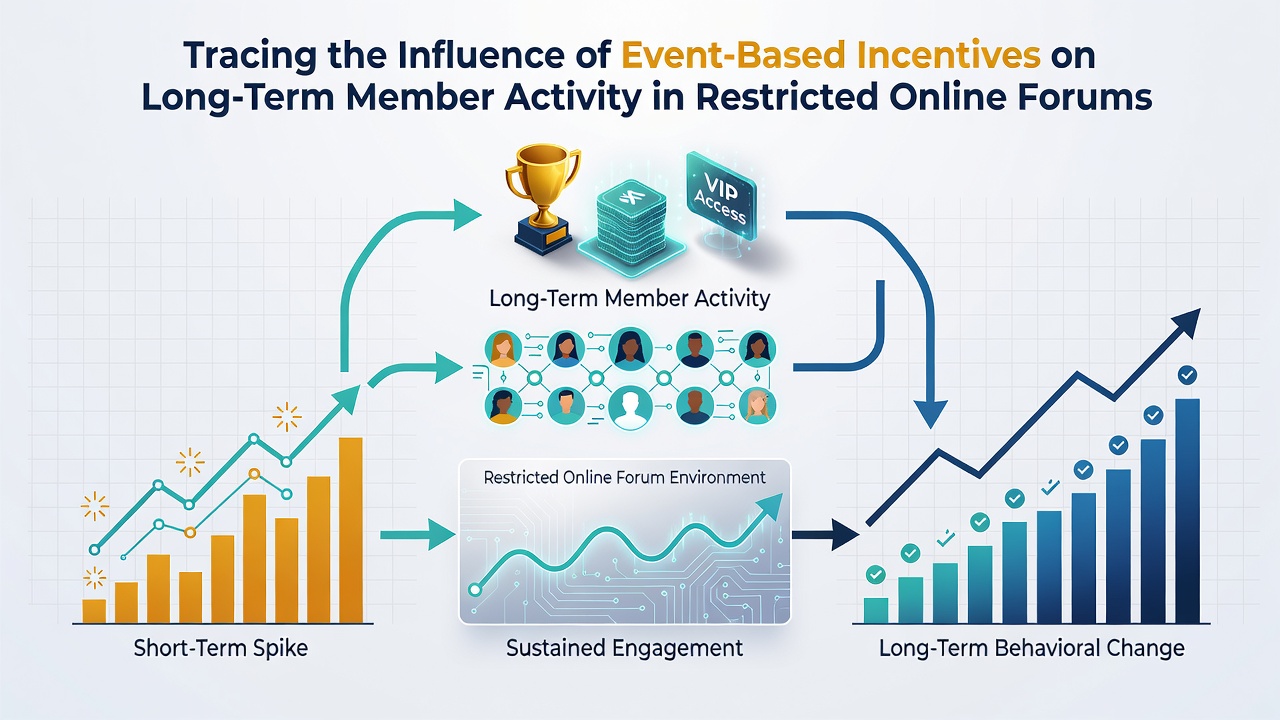
Tracking long-term activity requires metrics that extend beyond initial sign-ups, and analysts employ session duration logs, post frequency counts, and contribution quality scores collected over twelve to twenty-four month windows. Figures reveal that members completing at least three consecutive events maintain posting rates approximately 40 percent above baseline averages, according to aggregated platform reports shared at academic conferences. Those who've examined European Commission digital participation datasets further observe that incentive timing influences whether short bursts convert into habitual involvement, with events spaced six to eight weeks apart producing steadier curves than monthly or quarterly schedules.
One research initiative at a Canadian university compiled anonymized logs from twelve private forums and identified that reward visibility plays a decisive role, because members who see peer achievements displayed prominently continue contributing even after the event concludes. The same dataset showed that forums incorporating peer-nominated awards alongside organizer-led events recorded fewer drop-offs at the six-month mark.
Observed Patterns Across Different Forum Categories
Knowledge-sharing collectives focused on technical skills exhibit stronger responses to skill-verification events, whereas creative critique groups respond more readily to themed showcase challenges. Researchers discovered that in both categories the presence of cumulative progress systems, such as tiered reputation ladders updated during events, extends the window of elevated activity by several months. Data shows this extension holds across geographic regions, including North American hobbyist networks and Australian professional development circles, suggesting the effect stems from structural design rather than cultural variables alone.
Turns out the most durable outcomes appear when events require collaborative outputs instead of solitary tasks, because joint deliverables create ongoing discussion threads that persist after the formal event ends. Analysts examining records from 2023 through late 2025 documented that forums using this collaborative model retained 28 percent more members at the two-year mark than those relying on individual competitions.
Integration with Verification and Moderation Systems
Restricted forums frequently layer event incentives atop existing peer verification protocols, and this combination appears to reinforce participation norms. When event rules require verified members to endorse submissions, the resulting social accountability correlates with continued involvement beyond the incentive period. Reports from industry research groups indicate that platforms updating their moderation dashboards to highlight event-related contributions experience smoother transitions from temporary spikes to baseline activity levels.
What's interesting is how November 2026 scheduling aligns with fiscal reporting cycles for some nonprofit-hosted forums, allowing organizers to tie event success metrics directly to funding renewals and thereby sustain the incentive programs themselves.
Conclusion
Longitudinal evidence demonstrates that event-based incentives shape participation trajectories in restricted online forums through structured timing, visible rewards, and integration with existing community norms. Retention data collected across multiple regions and forum types consistently link well-timed collaborative events with extended member activity windows, while isolated or overly frequent events show weaker long-term associations. As platforms continue refining these approaches ahead of scheduled 2026 cycles, the accumulated records provide clearer benchmarks for evaluating which incentive configurations support sustained involvement rather than transient surges.